
What is the process of fertilization? CBC Grade 7 Notes in Kenya
Fertilization is the process where a male gamete (sperm/pollen) fuses with a female gamete (egg/ovule) to create a new, unique organism. In humans, this occurs in the fallopian tube when one sperm penetrates an egg. In plants, it involves pollen tube growth to deliver sperm to the ovule.
Sperms produced by testis which travel through the epididymis, sperm duct and then urethra and they are deposited in the vagina of the female by the penis during coitus. Ova (eggs) in woman are produced at intervals by the ovaries. Only one ovum is produced in turn by every ovary. This cycle lasts 28 days with every cycle the uterus undergoes major cyclical changes. The eggs are released onto the oviduct and then they move down to the uterus and to the outside after passage through vagina if not fertilized. Sperms deposited swim up the cervix into the uterus and oviduct where fertilization takes place.
Figure 1.8: Fertilization in Human Beings
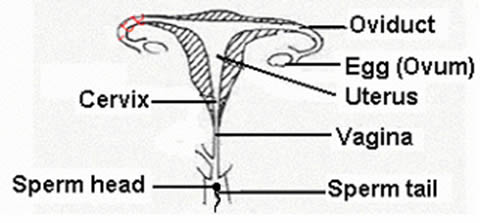
- Sperm Travel: Sperm is released into the vagina, travels through the cervix, and up into the fallopian tube.
- Egg Penetration: Sperm releases enzymes to break through the protective outer layer of the egg (zona pellucida).
- Fusion: The first sperm to break through fuses with the egg’s plasma membrane, and their nuclei merge.
- Block to Polyspermy: Immediately, the egg membrane changes to prevent any other sperm from entering.
- Zygote Formation: The resulting cell, now called a zygote, begins to divide as it moves to the uterus for implantation


Recent Comments