
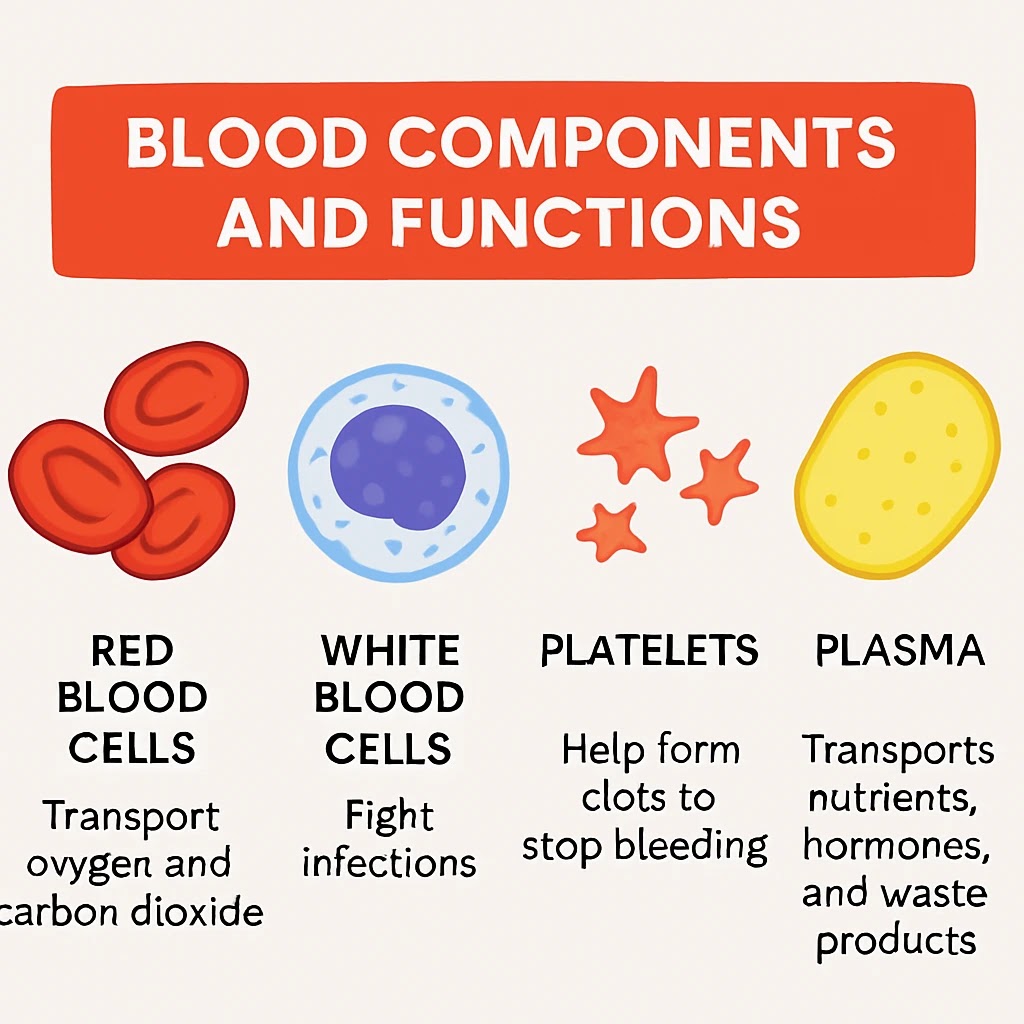
CBC Grade 7 Notes in Kenya What are the Functions of platelets?
CBC Grade 7 Notes in Kenya What are the Functions of platelets?
Platelets (thrombocytes) are small blood cell fragments produced in bone marrow that primarily function to stop bleeding—a process called hemostasis—by adhering to injured blood vessels, activating, and aggregating to form a temporary seal or clot. They also play crucial roles in wound healing, inflammation, and immune responses
Primary Functions:
-
- Coagulation Support: Platelets release chemicals that promote the blood clotting cascade, forming a fibrin mesh that reinforces the plug.
- Wound Healing: They act as “cellular glue” and release growth factors to promote tissue repair.
- Immune Response & Inflammation: Platelets can modulate immune responses, interact with white blood cells, and help neutralize pathogens,
-
Key Functions of Platelets:
-
- Hemostasis (Stop Bleeding): Platelets detect damaged blood vessels and immediately rush to the site to prevent excessive blood loss.
- Adhesion & Plug Formation: Upon damage, platelets become activated, changing shape and becoming sticky to adhere to the injured area and each other, creating a “platelet plug”
.
-
Platelet Lifespan and Count:- Lifespan: Platelets live for about 8 to 10 days.
- Normal Range: A healthy bloodstream usually contains 150,000 to 400,000 platelets per microliter (150–400 ×109 ×109 per liter).
- Deficiency: Low platelet levels (thrombocytopenia) can lead to serious bleeding issues.
a) Platelets
These are tiny cell fragments found in the blood. They are smaller than either white or red blood cells.
Functions
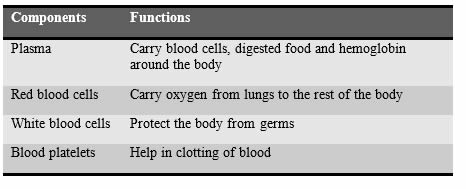
These help in the clotting of the blood. They prevent further loss of the blood from the part that was injured. They help to stop bleeding from cuts and wounds.


Recent Comments