
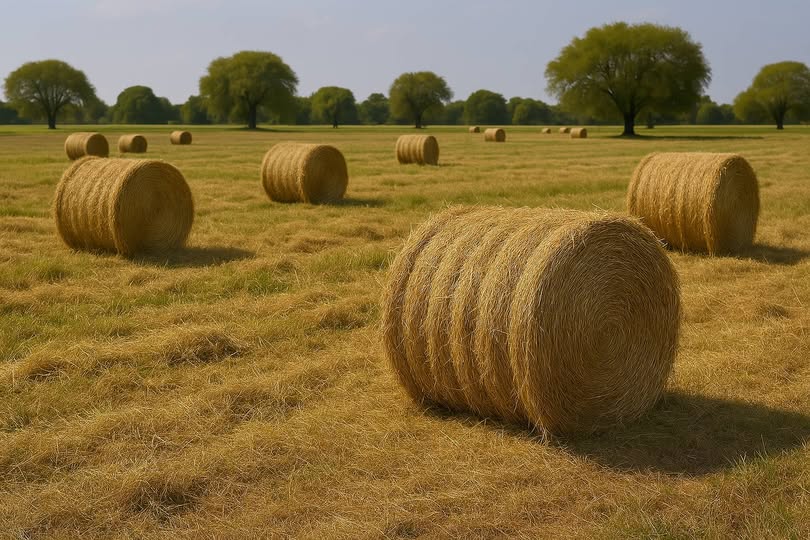
CBC Grade 9 Notes in Kenya-Baled hay Conservation Method
Baled hay is a method for preserving forage by drying, compressing, and tying it into manageable bundles to ensure, high-quality animal feed during dry seasons. It requires meticulous drying, compacting, and storage to avoid mold, ensuring high nutrient value.
- Hay refers to forage crops which have been cut and dried to about 15-20% moisture content so that they can safely be stored without undergoing fermentation and becoming moldy.
- Hay can be made from pasture grass and legumes such as desmodium
 Baled hay making process
- This method involves cutting grass during its flowering Cutting the grass at this time helps to preserve its nutritional value
- The hay-making process involves cutting, spreading cut forage for faster drying and putting it in rows (windrowing) for easier collection.
- The structures that can be used to make bales include:
- Metallic or wooden box
- Wooden
Materials required to make baled hay
- Dried forage such as grass, maize stover or straw
- Gloves
- Gumboots
- Knife
- Metallic or wooden box baler/wooden box
- Panga/sickle
- Rake
- Sisal twine/strings
Procedure followed when making baled hay:
- Wear gloves and gumboots to protect your hands and
- Cut fresh forage from the field using either a panga or a
- Spread the cut forage to allow it to dry for 2 to 3 days using a
- You can also use already dried forage materials from the field, such as maize stover, straw or
- Put the dried forage materials into the box baler or wooden box (approximately 40 cm x 50 cm x 75 cm).
- Place lengths of sisal twine in the
- Compact the materials by pressing them down tightly or applying pressure from the
- Tie the materials securely or bind the compressed hay using binding materials such as sisal twine or strings.
- Remove the baled hay from the
- Store the hay bales in a dry, shaded area for use during


Recent Comments